
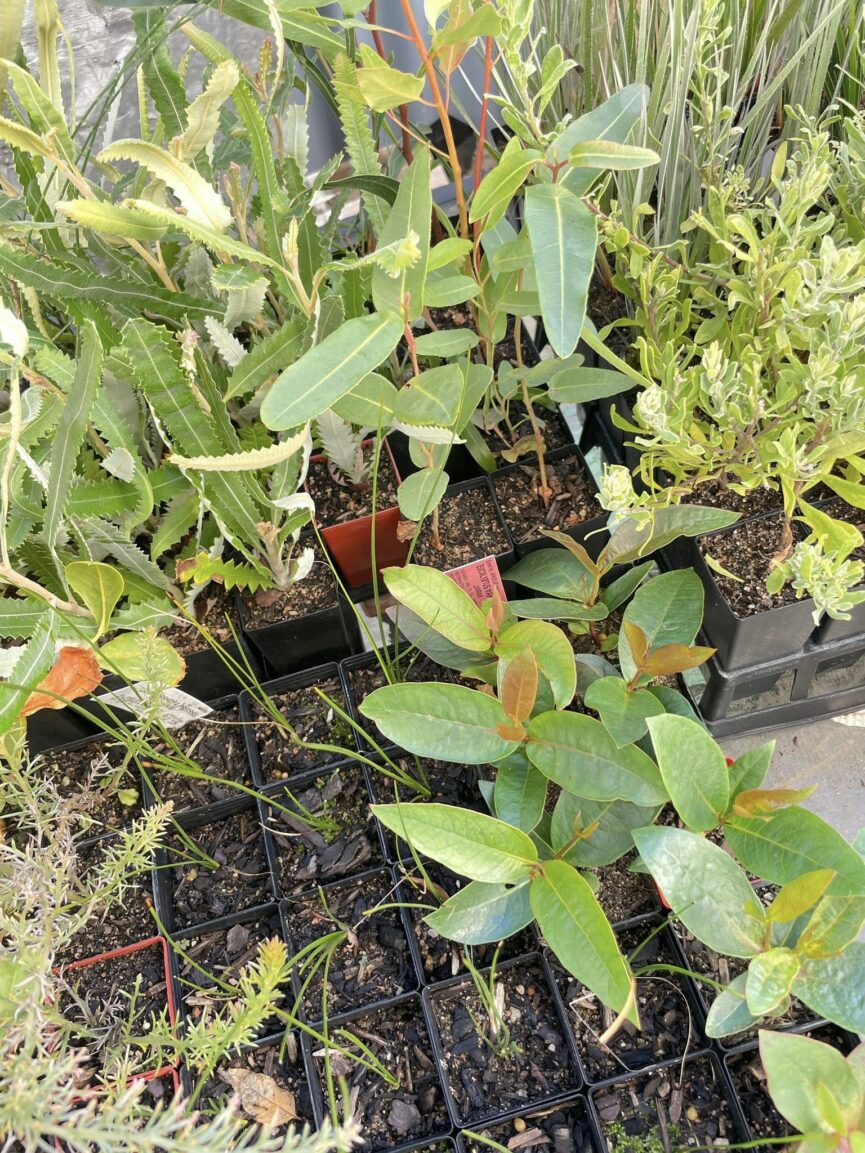
Growing local plants provides homes and food for urban biodiversity (birds, reptiles insects), helps to cool our neighbourhoods, and reduces the amount of watering needed. This page provides some resources to help you source and select local Western Australian plants to grow in your garden, verge or courtyard.
How do I know which plant species to grow?
Specialist nurseries can give good advice, but generally best to grow local species. Other sources of information include:
Bayswater Council has a complete list of local native plants, planting tips and species for particular garden styles.
ReWild Perth provide tips for starting a garden.
Where can I get healthy local plant species?
Specialist nurseries have a wide range of Western Australian and Australian plant species with knowledgeable staff for advice.
Apace Native Plant Nursery specialise in plants native from the Swan Coastal Plain and the Darling Range.
Australian Native Nursery specialise in Australian native plants.
Lulfitz Nursery have a wide range of Western Australian native plants.
Muchea Tree Farm have a range of native trees, shrubs, and ground covers.
Zanthorrea Nursery specialise in Australian natives and have lovely show gardens for great ideas.
Friends of Kings Park have quarterly plant sales. A comprehensive list of mostly Western Australian species is available 2 weeks before the sale. Their friendly Horticultural Advice and Support volunteers are also on hand to assist.
City of Vincent hold annual subsidised plant sales for residents of Vincent.
Which tree species should I grow to feed black cockatoos?
Local native tree species: Banksia attenuata (slender or candle banksia), Banksia grandis (bull banksia), Banskia menziesii (firewood banksia), Corymbia calophylla (marri), Eucalyptus gomphocephala (tuart), Eucalyptus marginata (jarrah), Eucalyptus patens (Swan River blackbutt), Hakea petiolaris (sea urchin hakea), Hakea prostrata (harsh hakea).
Nut trees such almond, macadamia, and pecan, are a good faster growing addition while native trees are maturing.
Water Corporation have a ‘Select the right tree‘ guide to avoid root inundation problems. Some great tips to get started are available here. Other tips for maintenance of your native plants are available here, but remember to leave the flowers on your cockatoo food trees. Black cockatoos eat the seeds from banksia cones which can take 12 months to mature.
Additional reading:
1. ‘Growing Locals – Gardening with Local Plants in Perth’ by Powell Robert Emberson Jane
2. ‘Creating Black Cockatoo Friendly Suburbs Saving Carnaby’s cockatoo in an urban context’ by Christine Groom
3. ‘Noongar Bush Tucker: Bush food plants and fungi of the south-west of Western Australia’ by Vivienne Hansen and John Horsfall
4. ‘Perth Plants: A field guide to the bushland and coastal flora of Kings Park and Bold Park’ by Russell Barrett and Eng Pin Tay