Colin Marshall reflects on the changing context of the Transition model:
For many of us involved in Transition, there’s a quiet question sitting in the
background that’s becoming harder to ignore.
The original Transition vision emerged at a time when there still seemed to be space
to change course — time to cut emissions, reshape economies, and influence
institutions before hard limits were reached. Grassroots action and local resilience felt
like viable levers for broader change.
But the context has shifted.
We’ve effectively passed the 1.5°C threshold, and further warming now looks locked
in. Extreme heat, rising food and energy costs, insurance retreat, and infrastructure
stress are no longer abstract future risks — they’re beginning to show up in everyday
life. That reality forces an uncomfortable but necessary question: what is Transition
for now?
Many groups are running into the same constraints. Core volunteers are often older
and deeply committed, but burnout is real. Younger people care, but are time-poor,
financially stretched, and wary of unpaid work that doesn’t seem to scale. Funding for
local, grassroots responses remains scarce, particularly when those responses quietly
challenge the dominant growth narrative. And broader public engagement is limited
while the “business as usual plus technology will save us” story still holds sway.
None of this is about people not caring. It’s about how systems shape what feels
possible.
One thing that’s become clearer to me is that societies don’t operate on shared facts so
much as shared beliefs. We’ve known about climate change for decades, but action
lagged because acting on those facts would have disrupted powerful economic and
cultural assumptions. People often act rationally within a story they believe everyone
else is still living by.
That story is now beginning to crack — not because of better reports, but because
lived experience is colliding with it.
We may be past the point of prevention. But we’re not past responsibility.
This suggests a quieter, more grounded role for Transition: helping people cope,
adapt, and retain dignity as conditions become more volatile. Preserving practical
skills. Keeping reality speakable. Strengthening local networks that matter when
systems strain.
For my own part, this has meant shifting energy toward helping households retrofit
their homes — reducing heat stress, lowering energy use, and cutting ongoing costs.
People don’t need to agree on the future to want a cooler house, lower bills, and
greater resilience. Whatever path unfolds, these are no-regret choices.
Transition was never really about saving the world on its own. It was about helping
people live more sanely and humanely in a changing one. That work still matters —
even if it now looks quieter, smaller, and more practical than we once imagined.
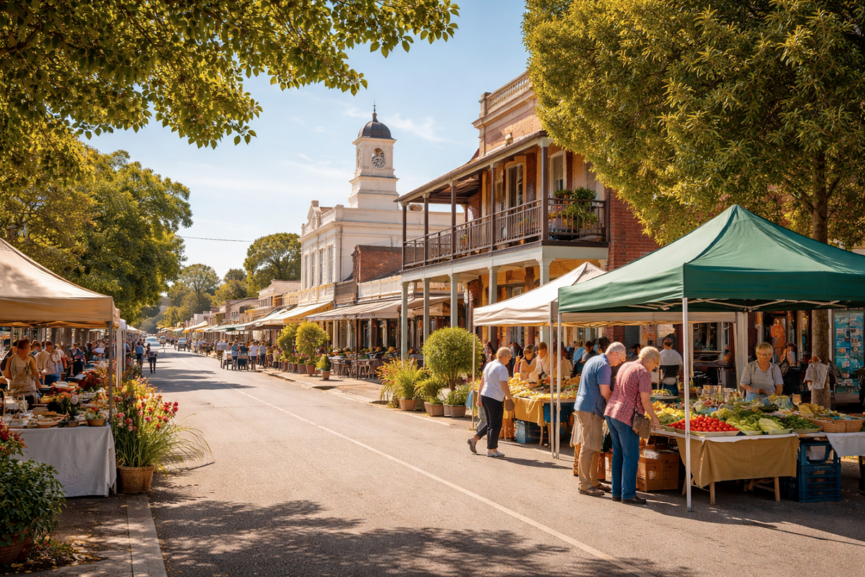
Image: A local Australian town street market — everyday life, community, and adaptation at a human scale. Created by Chat GPT
Colin Marshall
January 2026
Colin Marshall is an early member of Transition Guildford and an energy efficiency consultant specialising in the analysis of existing and new homes, passive solar design strategies, and adaptive responses to a changing climate.